About Black Park
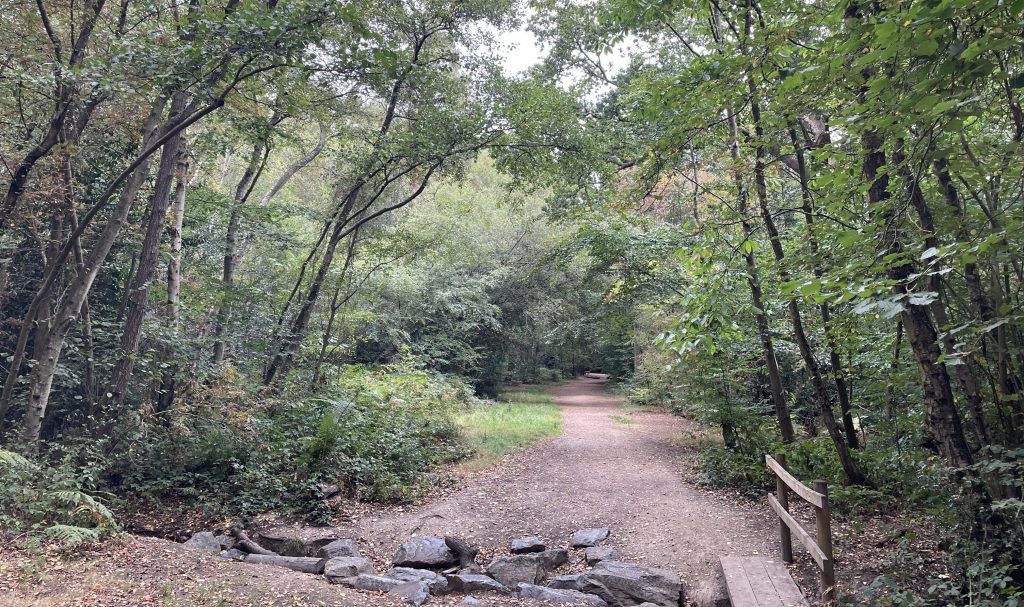
Black Park is a large country park in south Buckinghamshire, just north of Slough and on the edge of London. Covering 217 hectares, it’s home to a wide variety of landscapes and wildlife.
The southern part of the park is mostly woodland, with both mixed and coniferous trees, as well as open grassland areas and a six-hectare lake. Towards the north, the park becomes more open, with large stretches of lowland heath.
Some areas of the park are specially protected because of their importance for nature. There are two areas recognised as a Site of Special Scientific Interest (SSSI), and much of the northern part of the park is also a Local Nature Reserve (LNR).
History – The Langley Estate
Black Park was once part of the historic Langley Estate, which dates back to the 13th century. Records from 1202 mention a medieval deer park, and much of the land was originally open heath.
Forestry at Black Park
In the 18th century, the land that is now Black Park was drained and planted with coniferous trees. Around this time, the stream running through the park was dammed to create Black Park Lake.
The park’s name comes from the Black Pine (Pinus nigra), which was introduced as a timber tree. Commercial forestry became the main use of the land throughout the 19th century and continued well into the first half of the 20th century.
From Forestry to Country Park
In 1970, Black Park became one of the very first places in England to be designated as a Country Park. For a time it still operated mainly as a commercial forest, but over the 1980s and 1990s, the park was gradually transformed into the visitor-friendly space that it is today.
Film History
Black Park has long been a popular backdrop for film and television. With Pinewood Studios located right next door, the park has been used for filming ever since the studios opened in the 1930s. Between the 1950s and 1970s it became especially well known as a setting for Hammer Horror productions. In more recent years, it has featured in several James Bond films as well as the Harry Potter series.

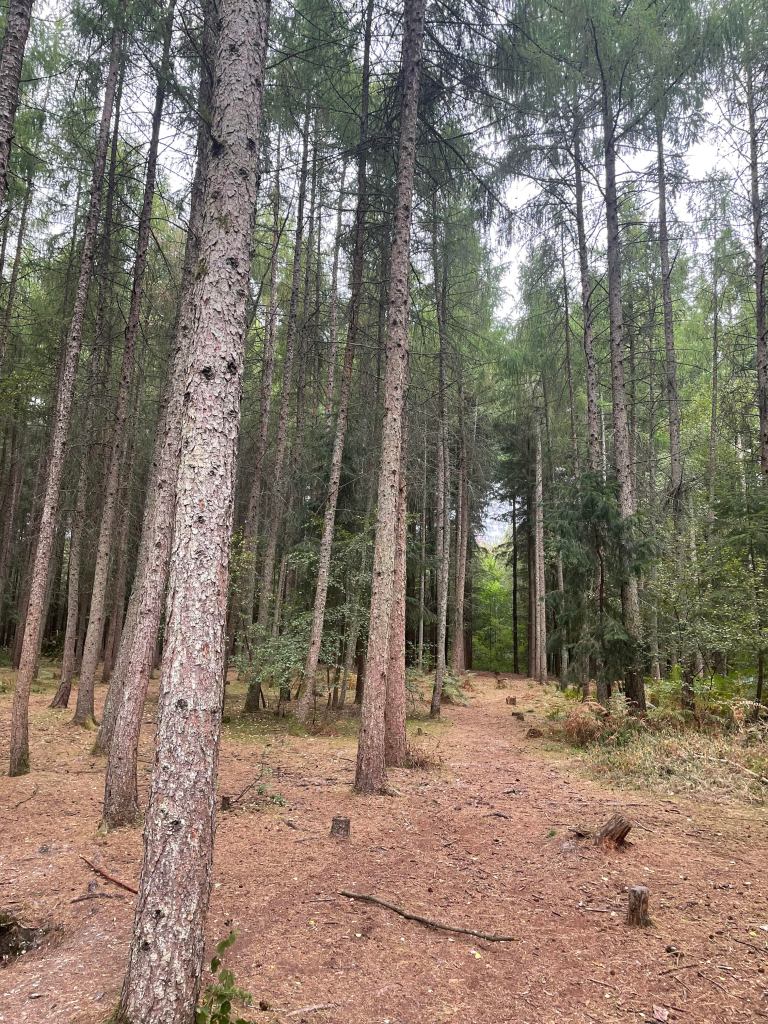
WOODLAND MANAGEMENT – Coniferous woodland
Thinning is evident in Black-park. This is the historical woodland management method of carefully removing some trees from a woodland to give the remaining ones more space, light, and nutrients to grow. Think about it in your garden. You thin your vegetable seedlings to allow the remaining ones to grow big and strong. It is the same in the woodlands, just on a much bigger scale. By reducing overcrowding, thinning also helps create more diversity in the lower layers of the woodland, improving habitats for wildlife.
WOODLAND MANAGEMENT – Broadleaf woodland
Coppicing is another historical woodland management method that is taking place in Black-park with the Alder and Hazel trees. It involves cutting trees down close to the ground to encourage lots of new shoots to grow from the base. These shoots can then be harvested for firewood, fencing, or other uses. This significantly increases the life span of the tree, increasing for example, the Hazel tree from 70 years to over 200 years. Coppicing also allows more light to reach the lower layers of the woodland, creating a varied structure, which is excellent for wildlife such as butterflies, birds, and small mammals.
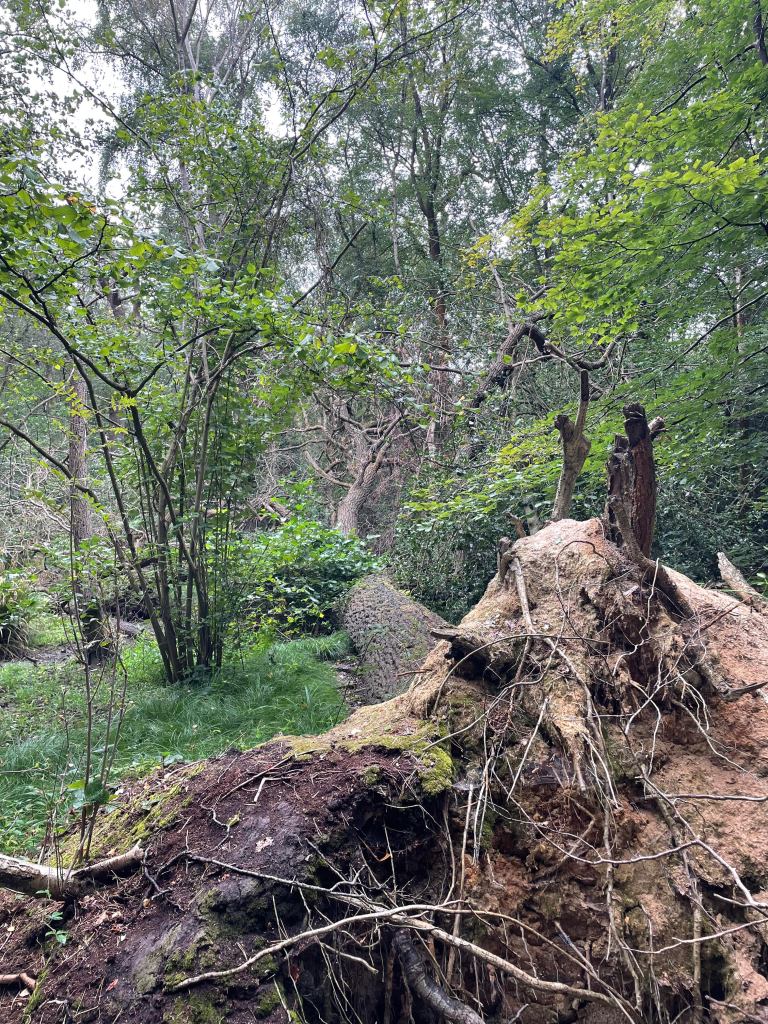
Within the broadleaf woodland, some fallen trees are also left on the ground. These create valuable habitats for fungi, insects, and other invertebrates, which in turn provide food for birds and mammals. Deadwood also helps recycle nutrients back into the soil, supporting the overall health of the woodland ecosystem. The fallen tree in my photo below, still has its root plate attached. This exposed root system creates additional habitats, providing shelter for small animals and insects.
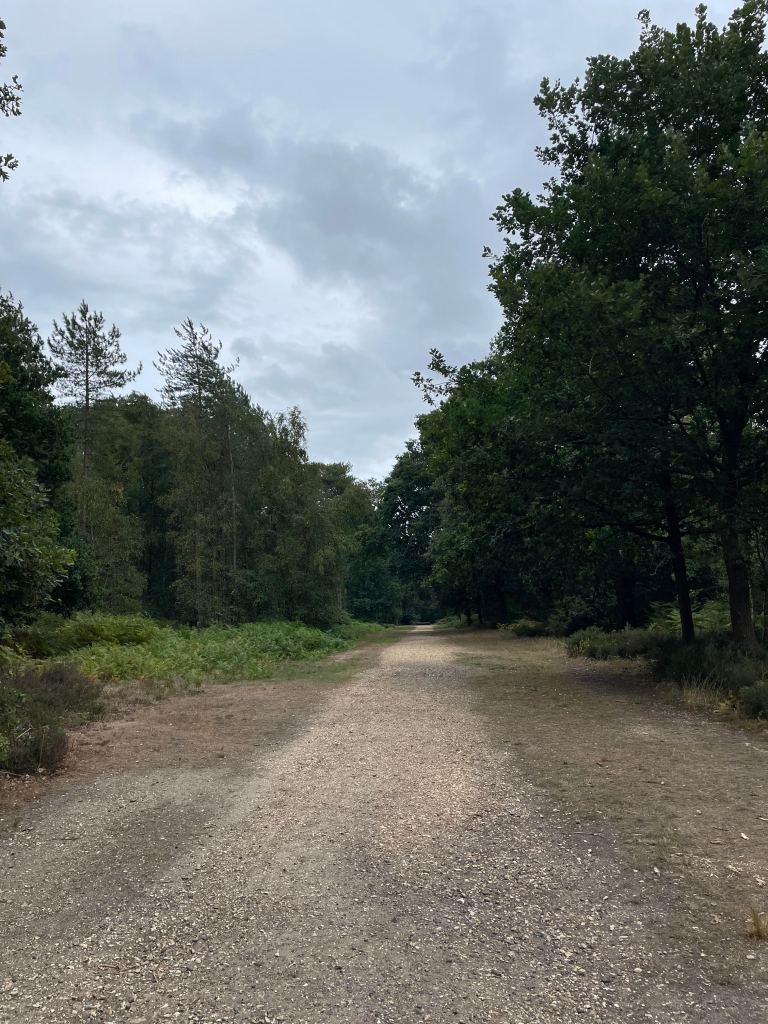
A much more current woodland management problem within Black-park is the environmental affect that the visitors have on the area. In the busiest areas of the park, around the lake, in mid Summer, 1000 people a day can be expected!!!! The coniferous areas are much quieter and favoured by dog walkers rather than families, but can still expect 100 people a day. This means that the walkways need to be managed.
Designated Pathways: The park has a landscape management plan that includes the upkeep of the paths, encouraging the majority of the visitors to use the main pathways. Installing well-marked trails and pathways keep visitors on designated routes, reducing soil compaction, root damage, and erosion. The paths are keep in a condition appropriate to their location, taking into consideration the frequency that they are used. The paths are cleared of trip hazards and over hanging vegetation. Weed management is carried out on paved surfaces and leaf removal from the paths in the busiest areas in the Autumn, removes slip hazards, keeping the area safe for the visiting public.
Zoning and Rotational Access: The park is divided into zones with varying levels of access. Some areas are designated for public use, while others are restricted to protect wildlife and habitats. This zoning helps manage visitor distribution and allows for habitat recovery in less-frequented zones.
Educational Signage and Interpretation: Informative signs and interpretation panels educate visitors about the park’s ecology, the importance of staying on designated paths, and the need to minimize their impact on the environment.
 Forest Footsteps
Leave a comment