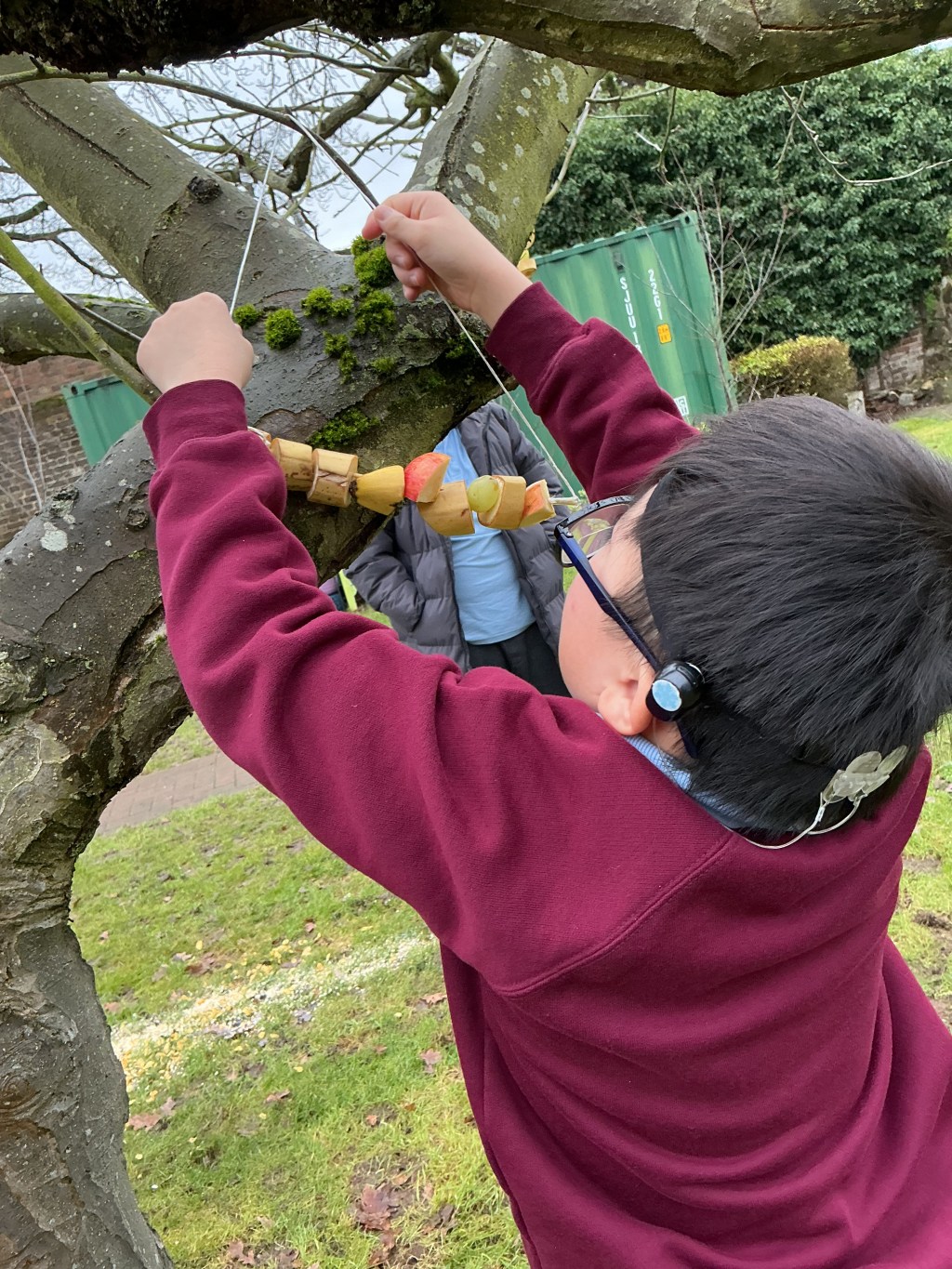
the Forest School Approach to Learning
The principle of long-term, regular sessions – Forest School is a student-centred way of learning that happens outdoors, usually in woodland or natural spaces. It’s not a one-off visit to the woods or a themed day outside, but something that happens regularly over time, giving students the chance to grow confidence, independence and skills gradually. Spending repeated, meaningful time in nature helps students develop in lots of different ways, not just academically.
The principle of student centered processes – At the centre of Forest School is the belief that students learn best through doing — through hands-on experiences, exploring, experimenting and solving problems. Sessions are guided by the students’s own interests and curiosity. I have noticed that when my students are able to choose what to investigate, how to build, or which path to follow, they are more engaged and willing to take small risks, try something new, or work with others.
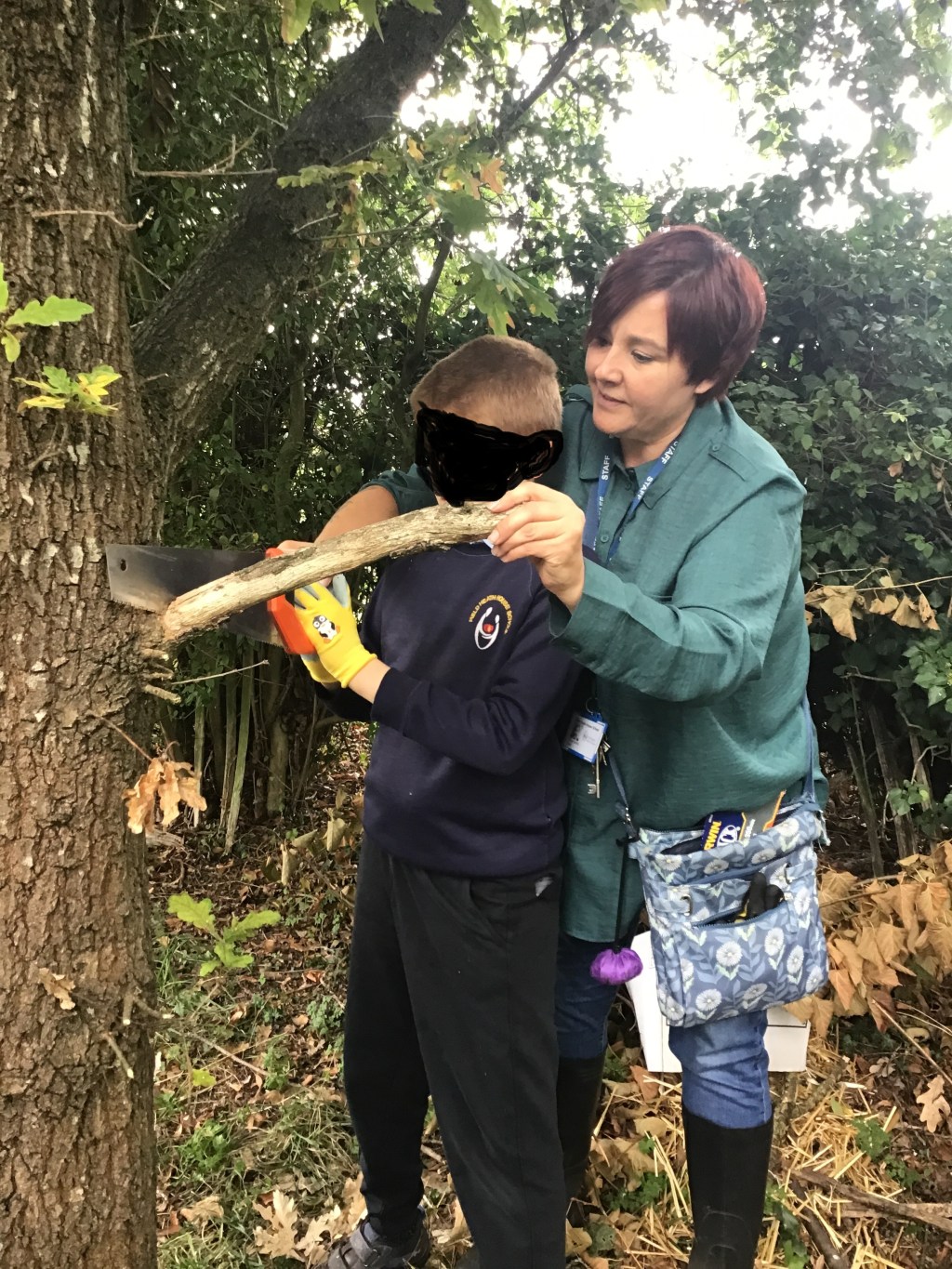
The principle of promoting appropriate risk taking – The practitioner’s role is to observe carefully, step in to scaffold when needed, and make sure learning happens safely. Risk is managed, but students are given space to assess and try things for themselves — whether that is climbing, using a tool, or experimenting with fire under supervision.
The principle of holistic development – Forest School supports the development of the whole student!!! Emotionally, students learn to cope with challenges, take pride in small achievements, and grow in confidence and self-esteem. Socially, they practice communicating, negotiating, cooperating, and working as a team. Physically, they develop strength, coordination, balance, and control through climbing, den building, tool use, and moving across uneven terrain. Cognitively, students are encouraged to think, problem-solve, reflect, and get creative. And all of this takes place in a natural setting, helping them notice the seasons, understand how the environment works, and develop a connection with nature.
The principle of practitioner reflection – Practitioner reflection in Forest School is an ongoing part of every session. It means watching how the students respond, thinking about what worked and what didn’t, and using those observations to shape future activities. It’s about noticing how the group interacts, whether the tasks are engaging, and how safe and supported each student feels. Even when a session doesn’t go exactly as planned, reflection helps me adapt and make decisions for next time, ensuring learning stays student-led, meaningful, and inclusive, while also helping me grow as a practitioner.
Overall, Forest School treats the natural world as a living classroom. It gives students the chance to explore, take risks, reflect, and learn at their own pace, helping them grow into confident, capable, and aware young people.
Are the principles currently relected in my outdoor learning sessions?
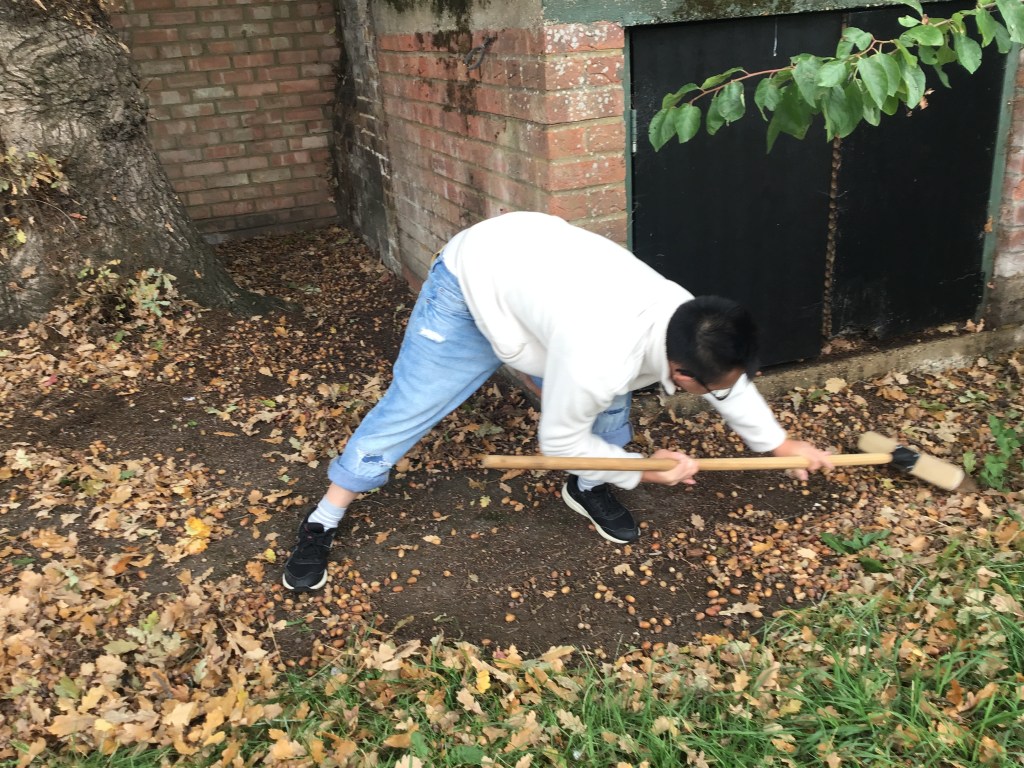
In my SEN school, I currently run regular outdoor learning sessions that already reflect many of the Forest School principles. The sessions take place in woodland and outdoor spaces, giving pupils the chance to explore and engage with nature, reflecting the principle of taking place in a natural environment. I focus on learner-centred activities, allowing pupils to choose how they participate — whether collecting materials, building shelters, observing wildlife, or taking part in group tasks — which mirrors the principle of learner-centred processes. Opportunities for supported risk-taking are included naturally, such as balancing on logs, climbing small trees, or using hand tools under supervision, reflecting the principle of promoting appropriate risk-taking. I also focus on the holistic development of each pupil, supporting emotional wellbeing, social interaction, physical skills, and cognitive growth through problem-solving and hands-on exploration, reflecting the principle of holistic development.
Although these are not full Forest School sessions yet, they provide a strong foundation for my future planning. As I move towards delivering regular Forest School sessions, I am using these principles to structure sessions. I plan to include opportunities for reflection and adaptation to strenthen my practise. (principle of practitioner reflection)
| Forest School Principle | How it is Reflected in My Outdoor Learning |
|---|---|
| Long-term, regular sessions | Sessions happen consistently over time, building familiarity, trust and confidence with the space, adults and peers. |
| Taking place in a natural environment | Outdoor sessions are held in woodland areas, allowing pupils to explore, notice seasonal changes, and develop a connection to nature. |
| Holistic development | Activities support emotional, social, physical, and cognitive growth — from climbing and tool use to communication and resilience. |
| Learner-centred processes | Students’ interests guide activities. Each student participates at their own level, whether observing, collecting, building, or leading. |
| Supported risk-taking | Safe opportunities for challenge are provided (climbing, tool use, uneven ground,) to build confidence and decision-making skills. |
| Practitioner reflection | I continuously observe and adapt sessions to meet individual needs, ensuring learning is inclusive, safe and meaningful. |
 Forest Footsteps
Leave a comment