
Unit 1 – 1.2 Differentiate between broad leaved and coniferous woodland ecosystems.

Bill (the Bulldog) and myself went for a trek through the local woods …….

Woodlands are made up of vertical layers and these can be classified according to their height. These can be broken down into the following:-
Canopy layer – tallest, most mature trees
Shrub layer – shorter or younger trees and large shrubs
Field layer – non woody plants, flowers and grasses
Ground layer – soil (type), mosses, tiny grasses and plants. Also includes debris such as fungi and fallen leaves / branches etc.

Woodlands can vary in their structure, with some layers being more dominant than others. This depends on several factors, such as the age of the woodland, the plant species present, how much sunlight can penetrate through the canopy, as well as the local climate and site conditions. All of these influence whether a woodland develops a strong canopy, a thick shrub or field layer or a diverse ground layer.
My local woodland is really interesting because it has both a coniferous and a broad leaved woodland. We took a walk to compare the two.

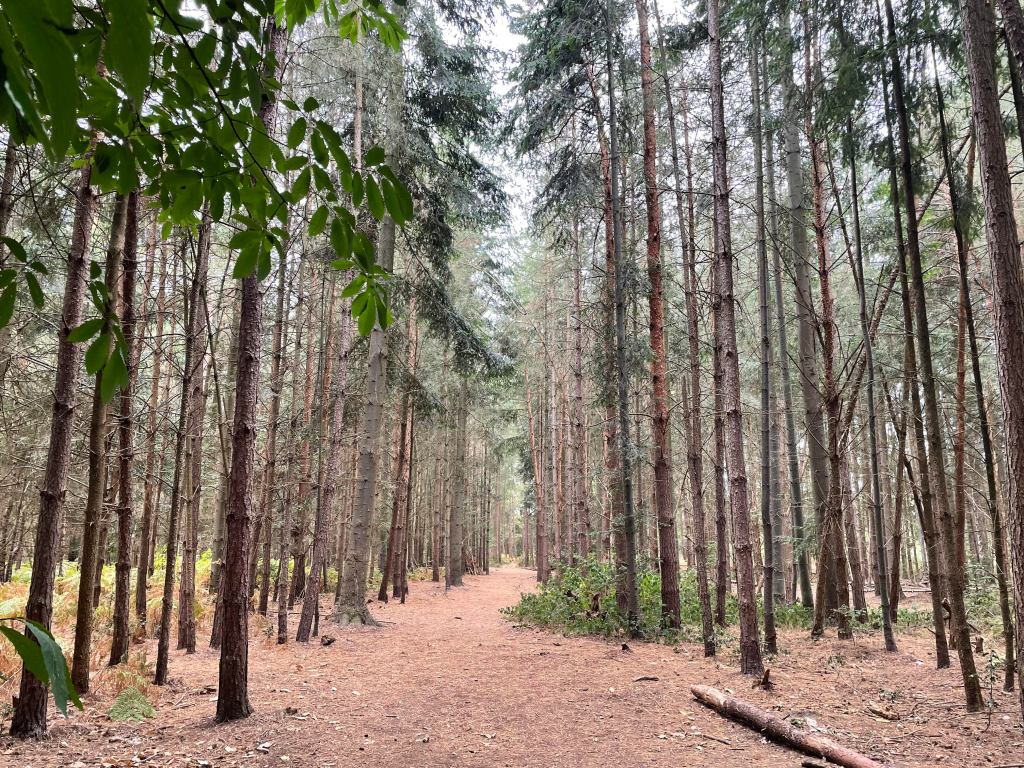
When looking at the layers, they are very different. In the coniferous woodland, the tall evergreen trees form a dense canopy. The very tall, parallel trunks reach up with very little interrupting them. The smaller branches start way up the trunk with many of them, just below the canopy having lost their needles. Most of the sunlight is blocked by the canopy, meaning the layers below are sparse. Their is very little in the shrub layer, other than the uniform, purposely planted trunks of the coniferous trees. The field layer has some vegetation but it’s mostly ferns, at the edges of the pathways where the sunlight has snuck through. The ground layer is spongy. Covered with so many, slow decomposing pine needles that the majority of the soil is covered. It is quiet to walk on and the smell of pine is powerful. There is not much vegetation at this level other than the moss growing on the odd fallen branch. The needles cause the soil to become more acidic and less nutrient rich, making it an even more unfriendly place for many plants to grow.
I do not notice a single animal in the coniferous woodland. It is quiet and still with very little movement. Almost eerie.

Forest School in a coniferous woodland. This woodland would be fantastic for den building because of the strong straight logs and relatively clear ground level, providing plenty of safe, easy accessible places to explore and build.
The most interesting part of our walk was passing from the coniferous woodland into the broad leaved woodland – the contrast in light, vegetation and atmosphere was striking. I stood there for some time, noticing how different the two habitats felt even though were are side by side.
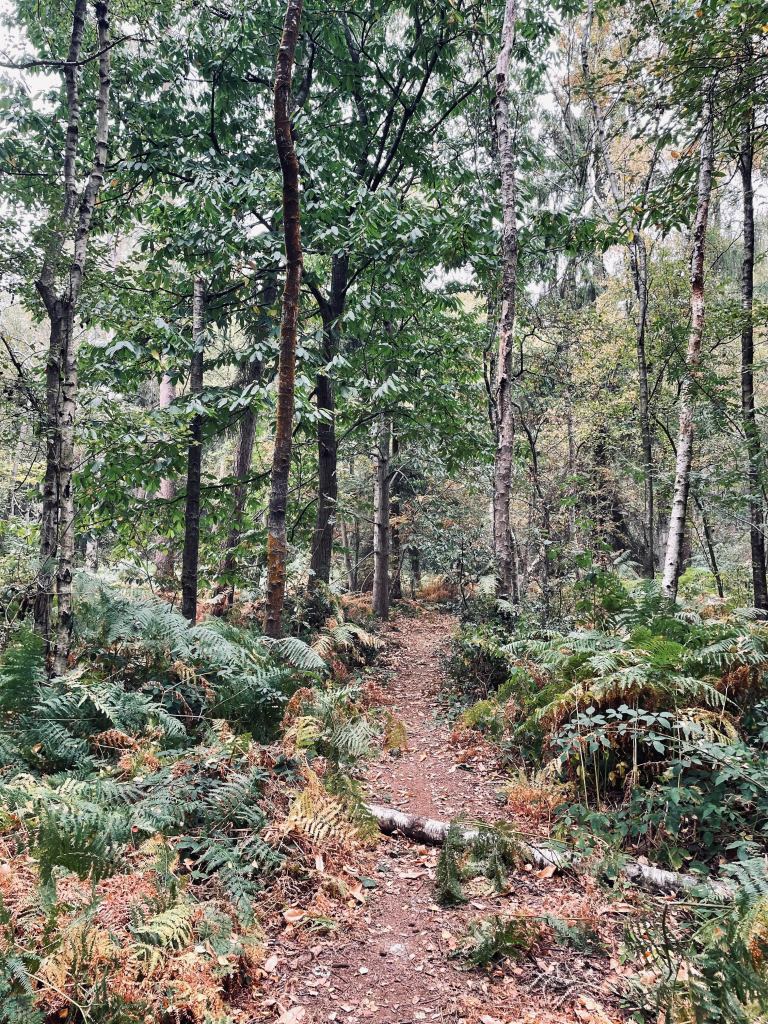
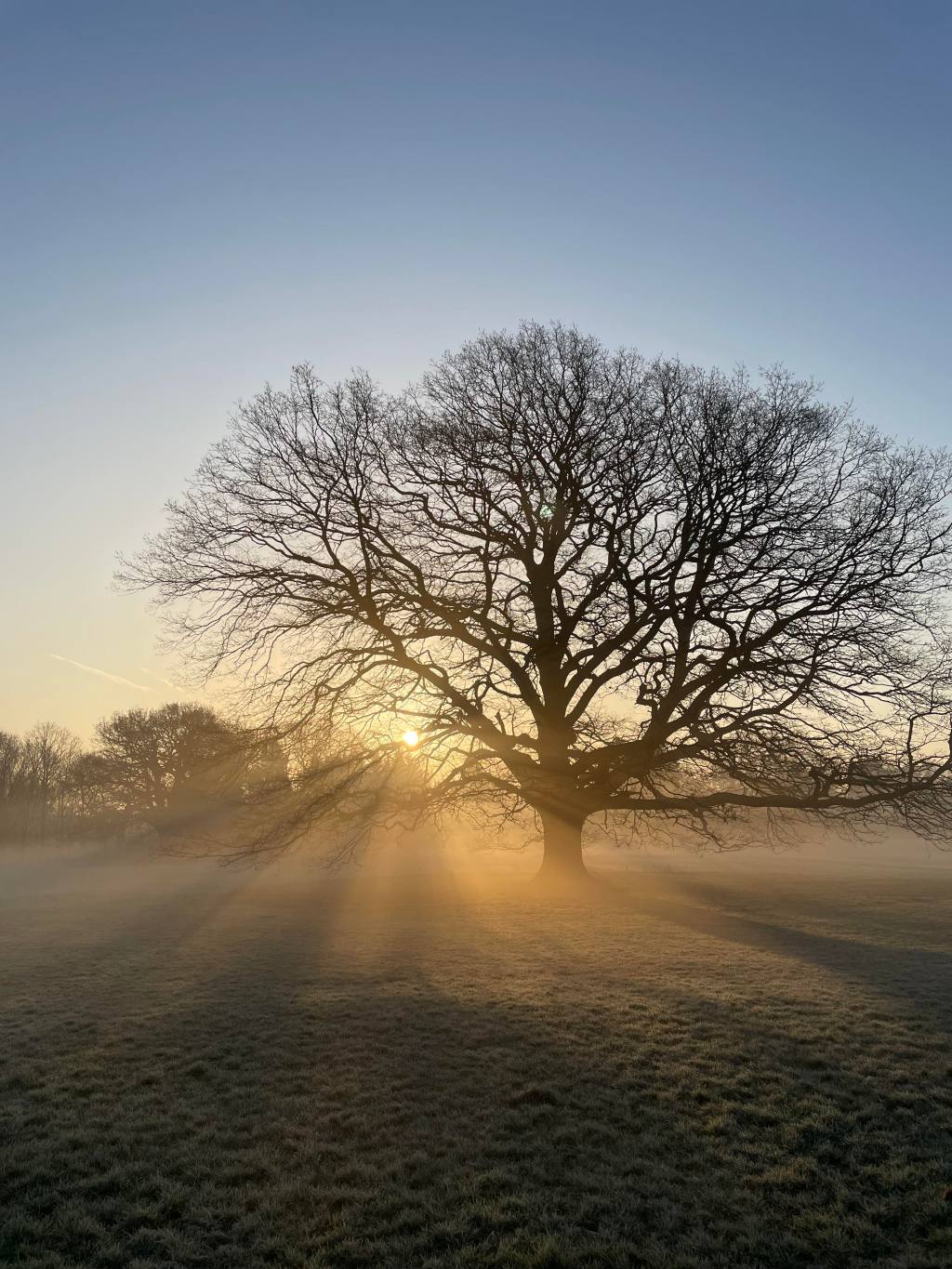
The broad leaved woodland has a more open canopy, allowing more light to reach the lower layers. There are a variety of mature trees, with an interesting mix of leaf shape and size. The shrub layer was much more “busy” with a variety of shrubs and small trees, growing in random spacings, sometimes overlapping. The angles of the branches were, in some cases almost horizontal meaning I had to weave and crouch much more to make my way through. The field layer was very dense, with a wide variety of species almost covering the soil either side of the pathways. There were ferns, grasses and brambles full of berries. In the clearings, there were large clumps of Heather.
The ground layer was again, very “busy”. There was a thick covering of fallen leaves in a variety of shapes, sizes and colours. There were roots and moss covered fallen branches, mushrooms at the bases of the trees and Ivy covering much of the soil. As we walked, we got caught up in brambles and snagged by low branches.
The woodland was very noisy with lots of movement – the wind blowing through the trees and shrubs, the birds and squirrels can be heard doing their thing. The diversity within the layers of the broad leaved woodland, mean there is a wide variety of food sources and many different places for wildlife to live. The thick leaf litter decomposes quickly adding lots of nutrients to the soil, making this woodland a rich and lively habitat.

Forest School in a broad leaved woodland. This woodland lends itself to nature exploration activities such as bug hunts and sensory activities because of the varied layers and rich diversity of both plants and wild life. Seasonal changes such as the fallen leaves in the Autumn and the new growth in the Spring make this woodland a great place of discovery.

5 responses to “Unit 1 – 1.2 Differentiate between broad leaved and coniferous woodland ecosystems.”

  1. Very interesting read, I look forward to reading the rest of this learning journey x

    Liked by 2 people

    1. Thank you Natalie – excited to take it …..

      Like

  2. Your thoughtful observations about these contrasting forest ecosystems remind me that nature herself is the finest teacher we could ever hope to encounter. What strikes me most profoundly about your account is how you’ve captured not merely the scientific distinctions between these woodlands, but their very souls – the quiet, cathedral-like solemnity of the coniferous forest versus the bustling democracy of the broad-leaved woodland.

    Your description of passing between these two worlds – that moment of transition where light, sound, and atmosphere shift so dramatically – speaks to something fundamental about diversity in all its forms. Just as our human communities thrive when different voices and perspectives intermingle, so too do these woodlands each serve their unique purpose in the grand tapestry of our natural heritage.

    The coniferous woodland you describe, with its orderly ranks of parallel trunks and hushed atmosphere, reminds me of a great library – quiet, purposeful, and designed for contemplation. Those dense canopies and acidic soils create conditions that favour particular species whilst excluding others. There’s a certain austere beauty in this selectivity, though as you rightly noted, it comes at the cost of biodiversity. The very uniformity that makes it excellent for den-building activities also creates an environment where only the most specialised creatures can flourish.

    Your observation about the eerie stillness particularly intrigues me. In coniferous forests, the thick needle carpet muffles sound, whilst the dense canopy filters light into a perpetual twilight. The evergreen nature of these trees means they photosynthesize year-round, but their needle-shaped leaves are designed for water conservation rather than maximum light capture. This efficiency comes with trade-offs – the slow decomposition of those needles you walked upon creates that acidic soil condition which further limits what can grow beneath.

    In contrast, your broad-leaved woodland sounds like a bustling marketplace of life – chaotic perhaps, but gloriously abundant. The deciduous nature of these trees creates an annual cycle of death and renewal that enriches the soil immeasurably. Those fallen leaves you described, decomposing rapidly compared to coniferous needles, release nutrients that support the “busy” understorey you encountered.

    What you’ve witnessed firsthand is the difference between what ecologists call simple and complex ecosystems. The coniferous forest operates rather like a well-disciplined army – efficient, uniform, and purposeful, but with clearly defined roles. The broad-leaved woodland functions more like a thriving town square – messy, diverse, and full of unexpected encounters, but remarkably resilient because of that very diversity.

    Your observations about Forest School applications are particularly astute. The coniferous woodland offers clear sight lines, strong building materials, and safe navigation – perfect for developing confidence and basic outdoor skills. Meanwhile, the broad-leaved woodland provides that sensory richness essential for developing observation skills and ecological understanding. Each serves education differently, just as each serves the broader ecosystem differently.

    The seasonal changes you mentioned in the broad-leaved woodland highlight another crucial distinction. Whilst coniferous forests remain relatively static throughout the year, deciduous woodlands offer a masterclass in adaptation and renewal. Spring’s fresh growth, summer’s full canopy, autumn’s spectacular colour change, and winter’s bare-branched vulnerability – each season teaches different lessons about resilience, change, and the wisdom of knowing when to hold on and when to let go.

    Bill the Bulldog, I suspect, appreciated both environments for their own merits – perhaps enjoying the clear paths of the coniferous section and the rich scents and hidden treasures of the broad-leaved areas. Animals often understand intuitively what we humans must learn through careful observation: that diversity strengthens the whole, even when individual parts seem contradictory.

    Your experience reminds us that true understanding comes not from reading about ecosystems in textbooks, but from walking amongst them, feeling the difference in atmosphere, hearing the contrast in soundscapes, and noting how our own bodies respond to these different environments. The fact that you stood at that transition point, taking time to truly notice the differences, speaks to the kind of mindful observation our world desperately needs more of.

    These woodlands, existing side by side yet so different in character, offer a powerful lesson about coexistence and the value of maintaining diverse approaches to the business of living. In our increasingly connected yet often divided world, perhaps we might learn something from how these different forest types can thrive in proximity, each contributing their unique gifts to the larger landscape.

    Thank you for sharing this journey of discovery. May your future walks continue to reveal the profound truths that nature offers to those willing to observe with both scientific curiosity and an open heart.

    Like

    1. Wow, what an amazing comment – thank you.
      I am so chuffed my feelings of the two environments came through. I have to be honest, I sat there for some time trying to write the assignment from what I knew and I was just not inspired – what I was writing was factually correct but very flat.
      Getting up and out into the forests was the best thing I could have done. I came home and re-wrote the whole assignment and I am so very glad I did.
      Thank you for taking the time to write such a great comment – really appreciate it.

      Liked by 1 person

Leave a comment

Related articles