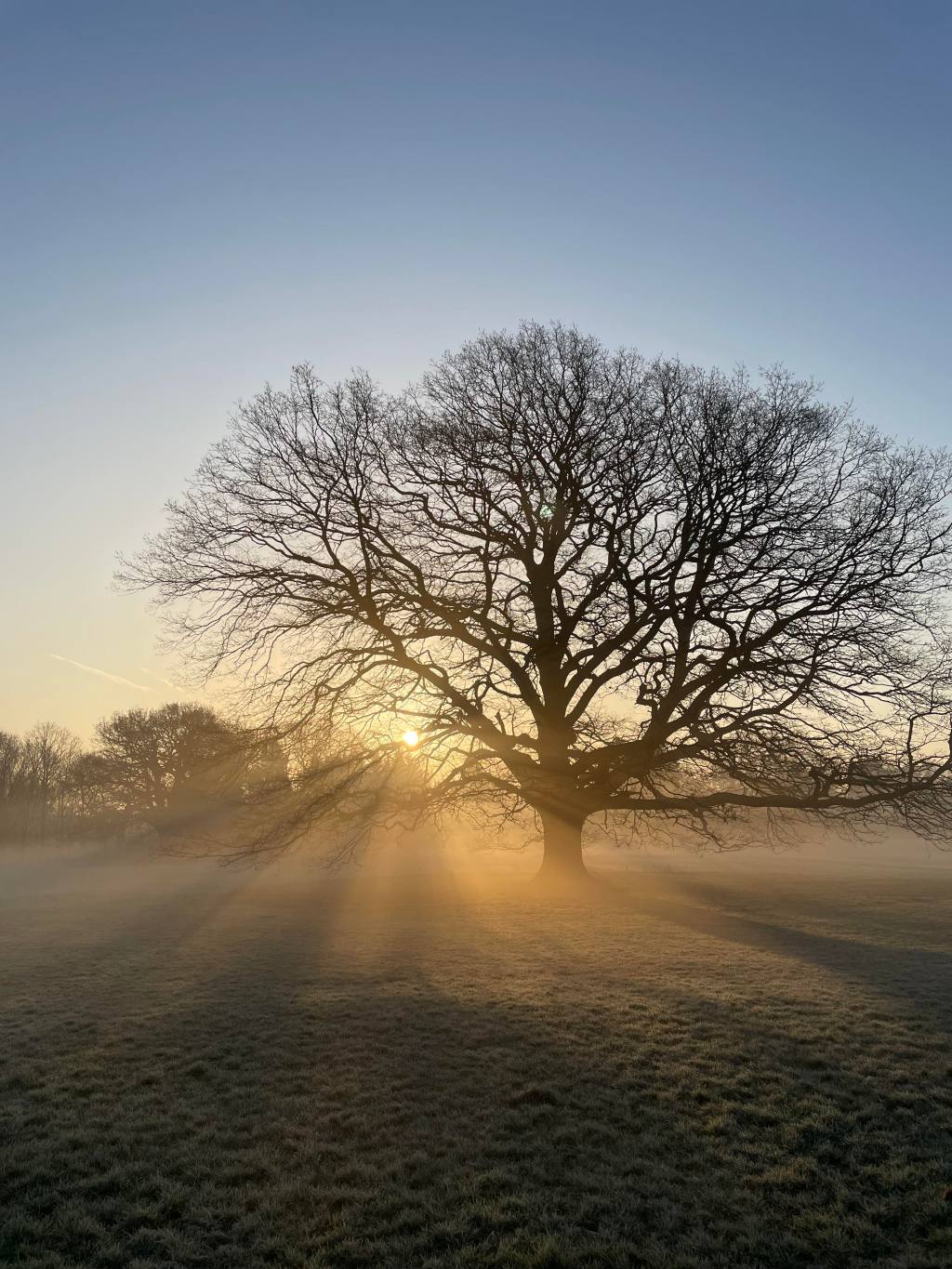

Bill (the Bulldog) and myself went for a trek through the local woods …….
Woodlands are made up of vertical layers and these can be classified according to their height. These can be broken down into the following:-
Canopy layer – tallest, most mature trees
Shrub layer – shorter or younger trees and large shrubs
Field layer – non woody plants, flowers and grasses
Ground layer – soil (type), mosses, tiny grasses and plants. Also includes debris such as fungi and fallen leaves / branches etc.
Woodlands can vary in their structure, with some layers being more dominant than others. This depends on several factors, such as the age of the woodland, the plant species present, how much sunlight can penetrate through the canopy, as well as the local climate and site conditions. All of these influence whether a woodland develops a strong canopy, a thick shrub or field layer or a diverse ground layer.
My local woodland is really interesting because it has both a coniferous and a broad leaved woodland. We took a walk to compare the two.
When looking at the layers, they are very different. In the coniferous woodland, the tall evergreen trees form a dense canopy. The very tall, parallel trunks reach up with very little interrupting them. The smaller branches start way up the trunk with many of them, just below the canopy having lost their needles. Most of the sunlight is blocked by the canopy, meaning the layers below are sparse. Their is very little in the shrub layer, other than the uniform, purposely planted trunks of the coniferous trees. The field layer has some vegetation but it’s mostly ferns, at the edges of the pathways where the sunlight has snuck through. The ground layer is spongy. Covered with so many, slow decomposing pine needles that the majority of the soil is covered. It is quiet to walk on and the smell of pine is powerful. There is not much vegetation at this level other than the moss growing on the odd fallen branch. The needles cause the soil to become more acidic and less nutrient rich, making it an even more unfriendly place for many plants to grow.
I do not notice a single animal in the coniferous woodland. It is quiet and still with very little movement. Almost eerie.
Forest School in a coniferous woodland. This woodland would be fantastic for den building because of the strong straight logs and relatively clear ground level, providing plenty of safe, easy accessible places to explore and build.
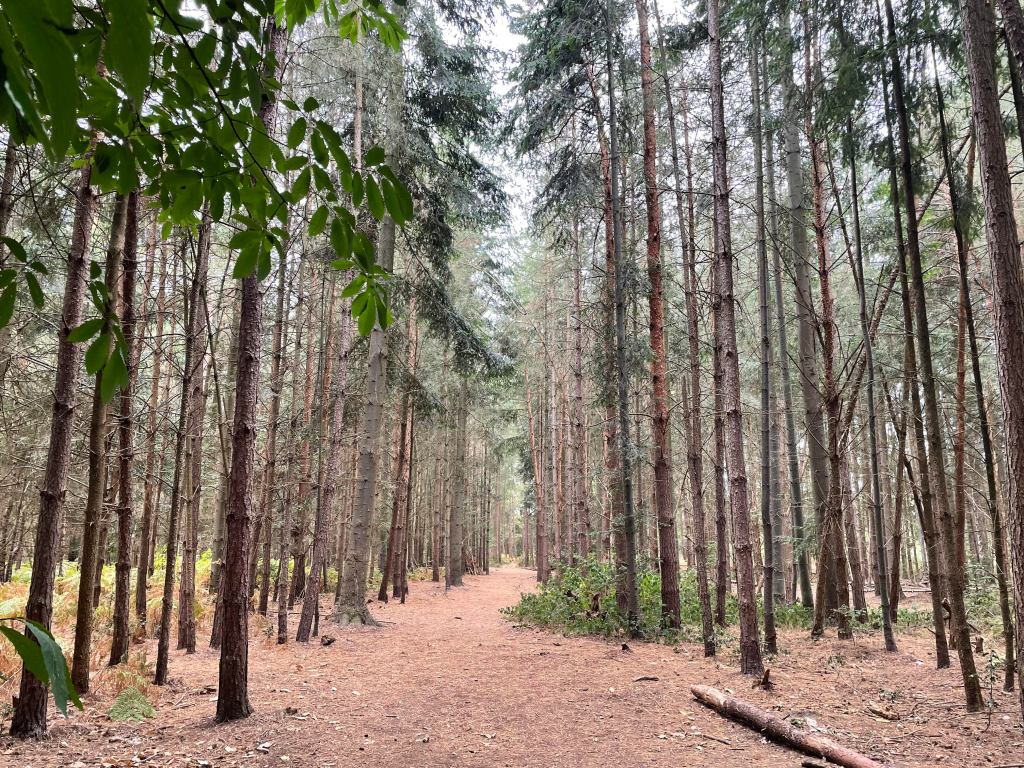
The most interesting part of our walk was passing from the coniferous woodland into the broad leaved woodland – the contrast in light, vegetation and atmosphere was striking. I stood there for some time, noticing how different the two habitats felt even though were are side by side.
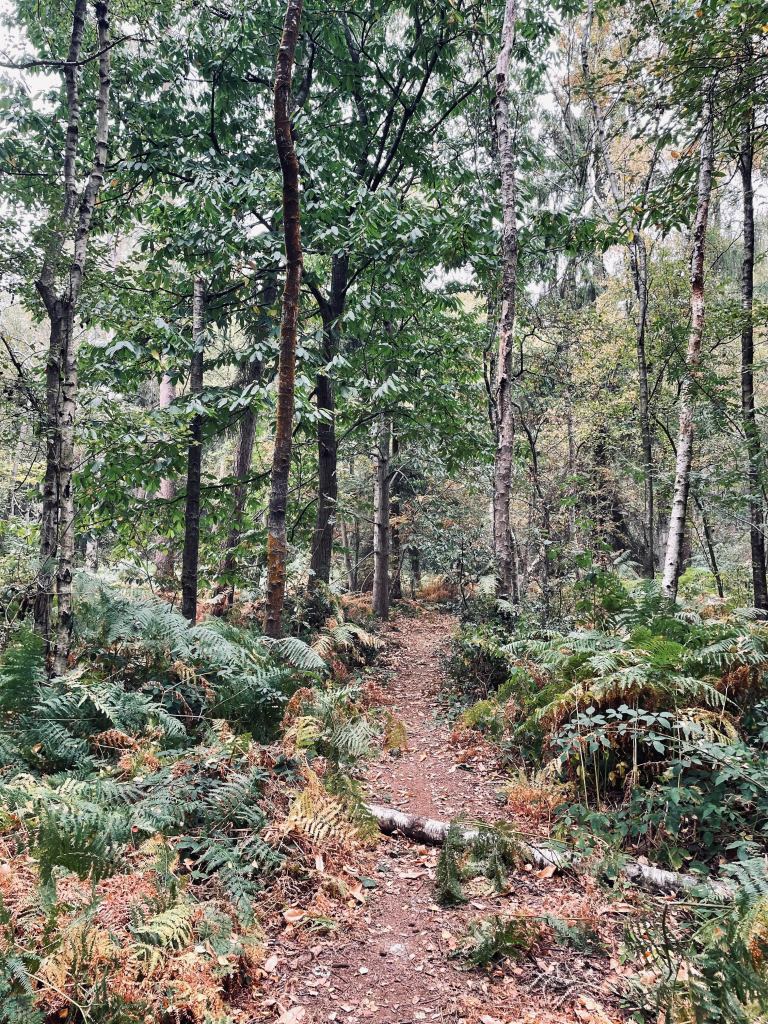
The broad leaved woodland has a more open canopy, allowing more light to reach the lower layers. There are a variety of mature trees, with an interesting mix of leaf shape and size. The shrub layer was much more “busy” with a variety of shrubs and small trees, growing in random spacings, sometimes overlapping. The angles of the branches were, in some cases almost horizontal meaning I had to weave and crouch much more to make my way through. The field layer was very dense, with a wide variety of species almost covering the soil either side of the pathways. There were ferns, grasses and brambles full of berries. In the clearings, there were large clumps of Heather.
The ground layer was again, very “busy”. There was a thick covering of fallen leaves in a variety of shapes, sizes and colours. There were roots and moss covered fallen branches, mushrooms at the bases of the trees and Ivy covering much of the soil. As we walked, we got caught up in brambles and snagged by low branches.
The woodland was very noisy with lots of movement – the wind blowing through the trees and shrubs, the birds and squirrels can be heard doing their thing. The diversity within the layers of the broad leaved woodland, mean there is a wide variety of food sources and many different places for wildlife to live. The thick leaf litter decomposes quickly adding lots of nutrients to the soil, making this woodland a rich and lively habitat.
Forest School in a broad leaved woodland. This woodland lends itself to nature exploration activities such as bug hunts and sensory activities because of the varied layers and rich diversity of both plants and wild life. Seasonal changes such as the fallen leaves in the Autumn and the new growth in the Spring make this woodland a great place of discovery.


 Forest Footsteps
Leave a reply to Bob Lynn Cancel reply