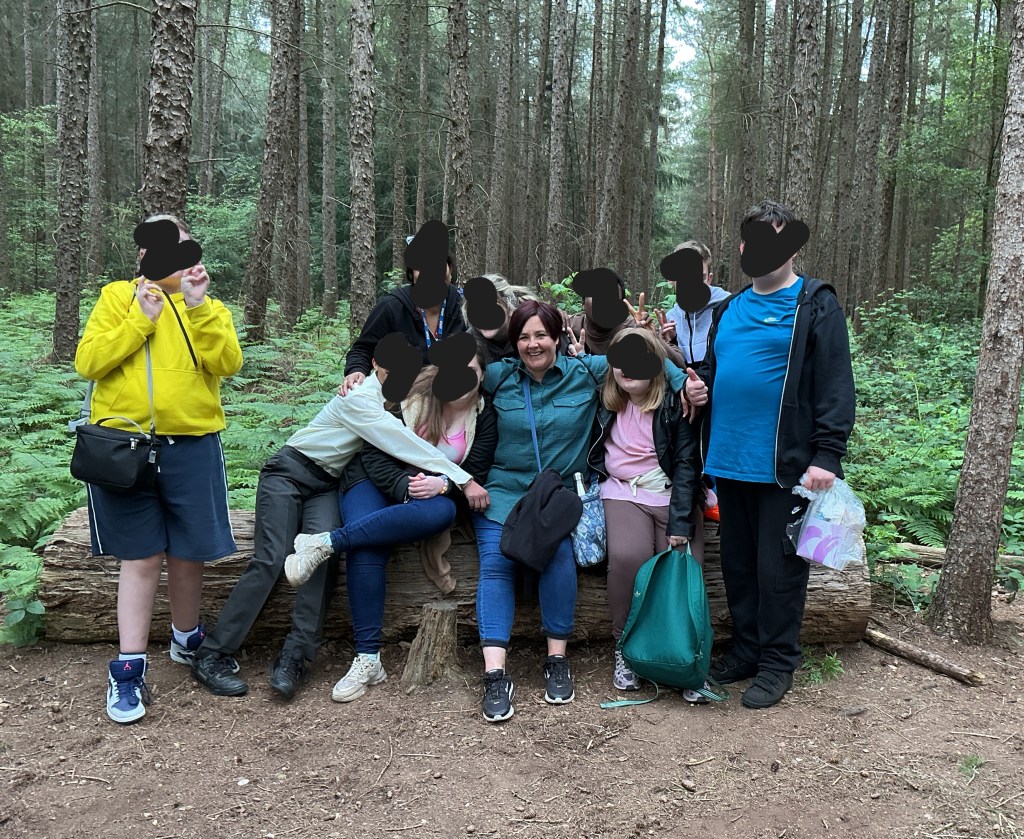
Forest School helps to develop resilient, confident, independent and creative learners through a student-led approach and hands-on experiences in a natural environment.
Resilience
Resilience is developed by giving students regular opportunities to try new skills where the outcome is not always successful straight away. Forest School naturally creates these situations, where students may not achieve the expected result first time and need to keep trying. As students attend sessions week by week, they begin to understand that practice and repetition help them improve, and their resilience builds over time.
Skill-based activities in particular support this, especially for SEN students who are often used to high levels of adult scaffolding and being told exactly what to do. At Forest School, students are encouraged to think more independently and try things before immediately asking for help. Many of my students will quickly say “help me” when they encounter difficulty, so part of the process is supporting them to pause, attempt a solution, and build confidence in their own ability first.
Working in groups also supports resilience, as students have to manage different ideas, preferences and ways of doing things. This can sometimes lead to frustration or disagreement. Learning how to cope with this, listen to others, and find solutions helps build emotional resilience and problem-solving skills. Conflict situations in Forest School are often used as learning opportunities, with students supported to resolve issues and continue working together.
Currently, I am mixing the groups so they include a range of abilities and confidence levels. This has been working well so far, as natural leaders are starting to emerge and some students are beginning to take more responsibility within their groups. This has supported resilience, as students are learning to manage different personalities, ideas and approaches while still completing tasks.
However, over the next few sessions I will begin to change this approach. I do not want quieter students to consistently take a back seat or rely on others to lead. By grouping some of these students together, I aim to encourage them to take more responsibility, make decisions, and persist with tasks without stronger personalities taking over. This should further develop their resilience, as they will need to problem-solve and support each other more directly.
Confidence
Confidence is the ability for students to have belief in themselves and feel secure when working both independently and with others. In Forest School, confidence develops through repeated exposure to practical activities and familiar routines in a supportive environment.
As students return each week, they become more comfortable with the setting and more willing to attempt tasks on their own. Many SEN students may initially lack confidence and rely heavily on adults for reassurance, but over time they begin to take more risks and show more independence in their approach.
Confidence is also supported by the freedom to explore and complete tasks in different ways, as there is no single correct outcome. This allows students to experience success in a way that suits their own abilities and learning style, which often leads to increased self-belief and pride in their achievements.
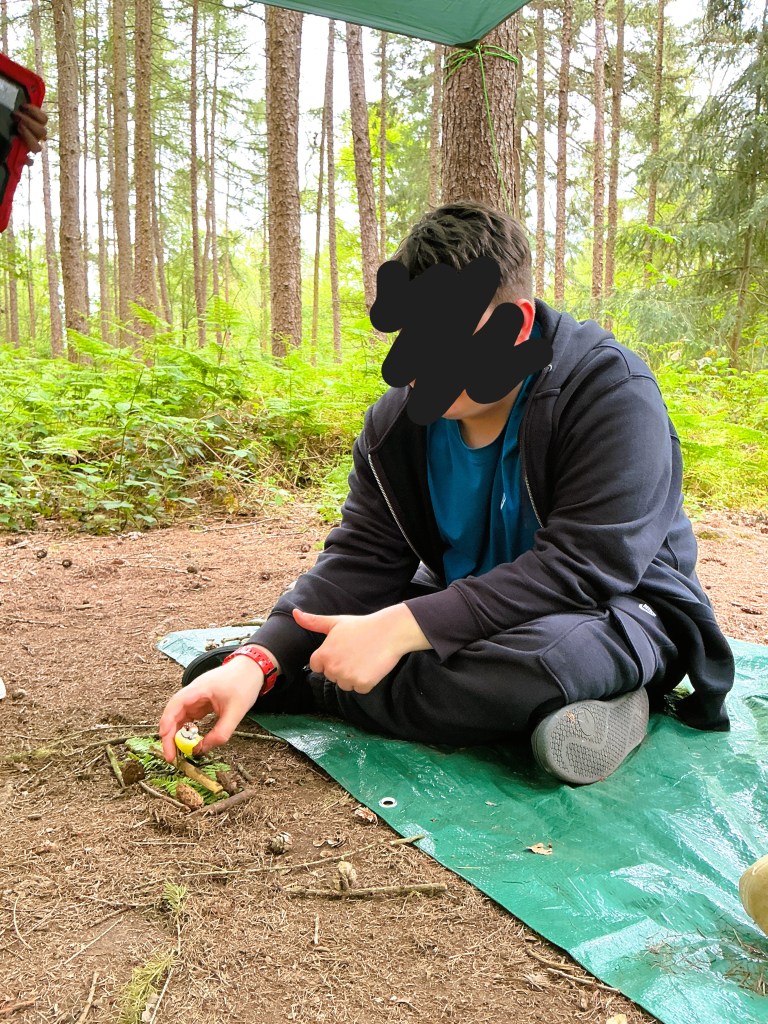
For example, in a recent session focused on wildlife, students were asked to “build a home for a bird”. Most students naturally created round nests, but one student chose to build a square one. At first, support staff tried to guide him towards the “expected” shape, but it became clear that his idea was valid for him and his understanding of the task. Once he was allowed to continue in his own way, he engaged fully in the activity and completed his design with confidence. He showed clear pride in what he had made and was keen to share his finished nest with others.
Independence
Independence is developed through the student-led nature of Forest School, where students are encouraged to make choices, problem-solve and attempt tasks with reduced adult direction. This is especially important for SEN students who may be used to high levels of scaffolding inside the classroom.
At Forest School, adults take more of a facilitative role, giving students time to think and try things before stepping in. Over time, this helps reduce reliance on adults and encourages students to take responsibility for their own learning and actions.
Students are also encouraged to complete practical tasks such as collecting resources, moving materials or deciding how to approach an activity. These repeated routines help build familiarity and increase independence gradually.
For example, when I delivered my very first Forest School session, all of my students tended to stay together and wait for adult instructions before attempting any task. There was a strong reliance on staff to direct every step, and very little independent decision-making.
Now, having delivered my third session, the independence shown by some of the group is already really noticeable. Several students are beginning to move away from adults, make simple choices about what they want to do, and start tasks without waiting to be told. While they still need support at times, there is a clear shift from dependence towards trying things for themselves.
Creativity
Creativity is the ability for students to develop their own ideas, make choices, and use materials in different ways to create something meaningful to them. In Forest School, creativity is developed through open-ended tasks and the freedom to explore the woodland environment without a fixed outcome.
Students are given the opportunity to choose their own activities and use natural resources in ways that they see fit. This is especially important for SEN students, as it allows them to engage without pressure to produce a “correct” result and supports them in exploring ideas at their own level.
Creativity is also encouraged through planned open-ended activities such as making shelters, or building simple natural structures. These tasks allow students to interpret instructions in their own way, which often leads to a wide range of different outcomes within the group.
A key part of Forest School is that all ideas are valued. There is no single right answer, and students are encouraged to share what they have created. Seeing others’ ideas also helps students develop their own thinking and try new approaches they may not have considered.
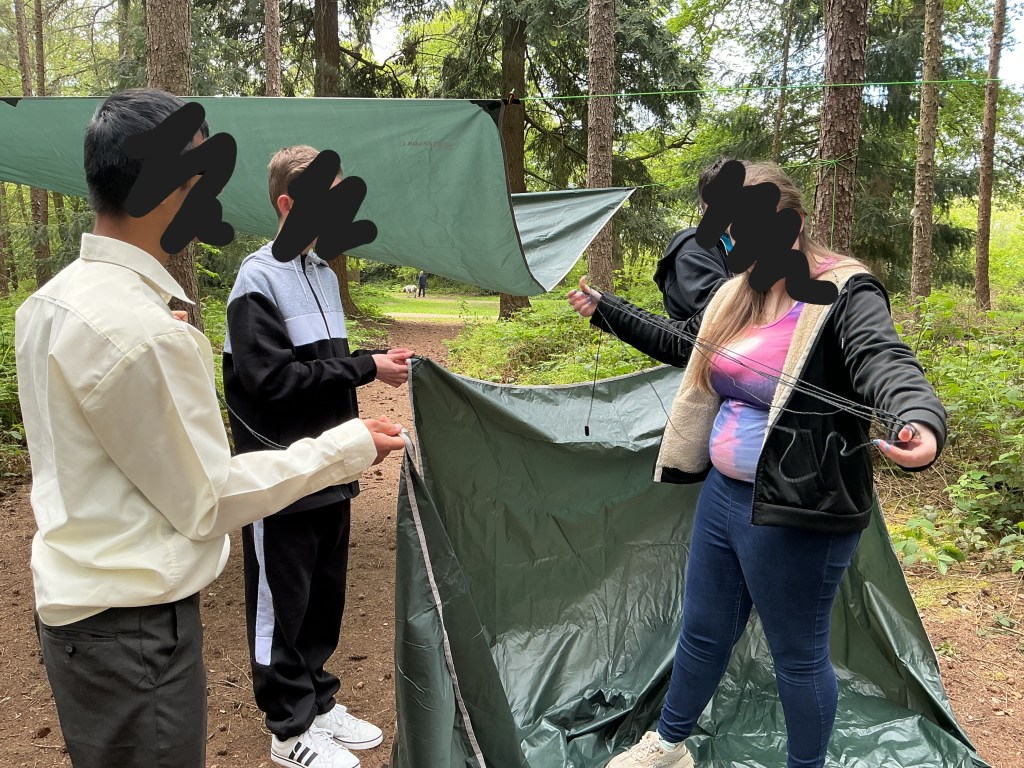
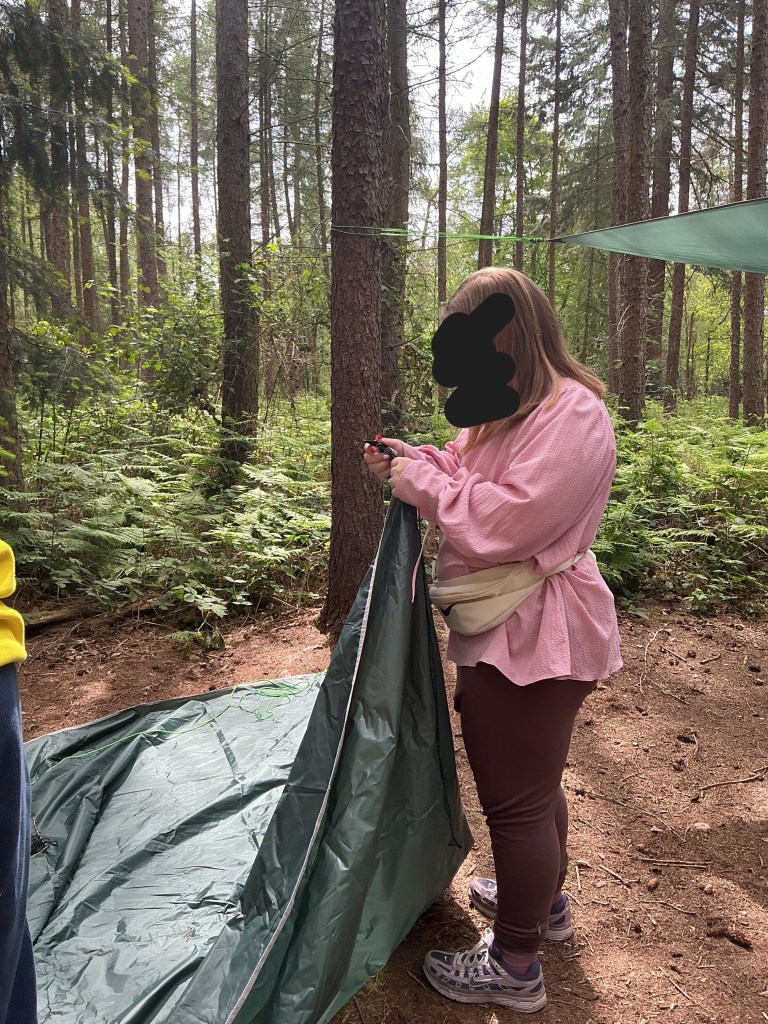
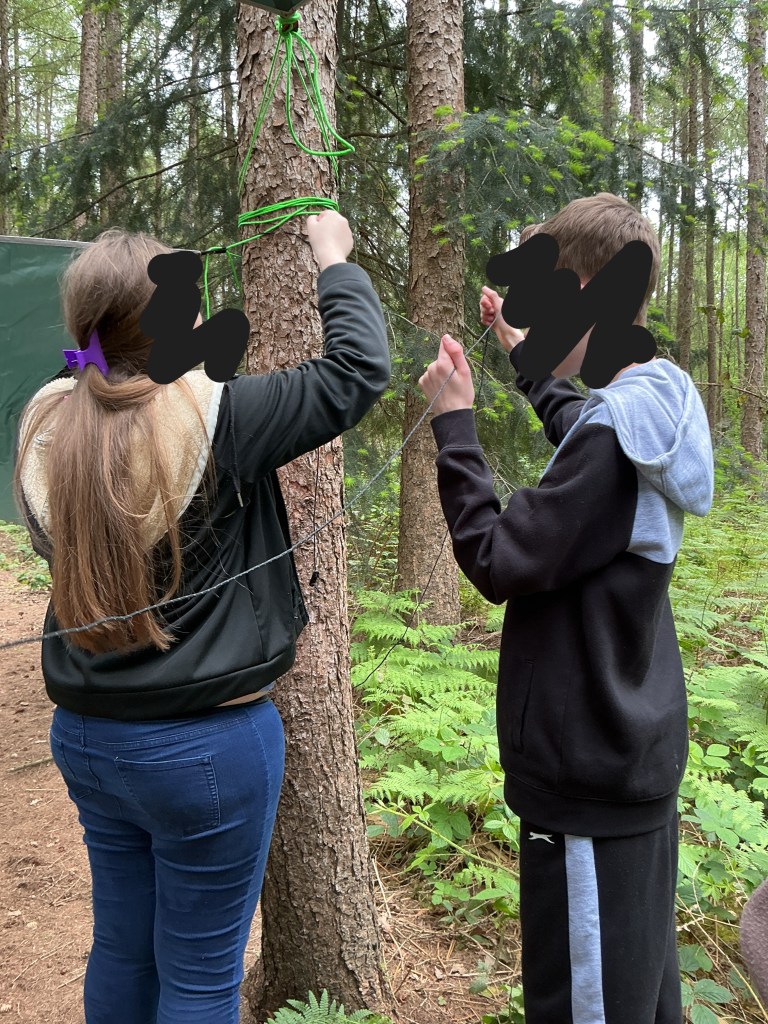
For example, we have been exploring the use of shelters in our basecamp area. At this stage, my students are not ready to learn or replicate specific knots, and I did not want them to feel discouraged by not being able to achieve a named knot correctly. Instead, the focus was on experiencing the excitement and success of putting up a shelter first.
I provided a range of materials and encouraged the students to work together to see how they could construct their shelters in their own way. The results were really creative, with each group approaching the task differently depending on their ideas and communication style.
Next week, we will begin to introduce named knots, building on the confidence and experience they have already gained from this initial open-ended activity.
Overall, resilience in Forest School develops over time as students are regularly faced with challenges and encouraged to keep trying. As they become more familiar with the sessions, they rely less on immediate adult support and begin to persevere for longer. Changes to groupings will further support this by giving quieter students more opportunity to take responsibility. This helps students build confidence to keep going, even when tasks are difficult.


Leave a Reply