A student’s behaviour can have a significant impact on both their own learning and the learning of others. Behaviour is a form of communication, and as a Forest School practitioner it is important to understand what a student’s behaviour may be telling us rather than simply reacting to it. In my role, working with students with special educational needs (SEN), behaviour is often influenced by communication difficulties, anxiety, sensory needs, confidence or previous experiences rather than deliberate disruption.
When a student feels calm, safe and engaged, they are much more likely to participate, communicate with others and develop new skills. They are able to solve problems, work alongside their peers and become increasingly independent. However, if a student becomes anxious, frustrated or overwhelmed, they may withdraw from activities, refuse to participate or become dysregulated. This can affect not only their own learning but also the learning of others, particularly if other students become distracted or anxious themselves. I have found that remaining calm, offering reassurance and adapting activities where needed helps students regulate their emotions and re-engage with learning.
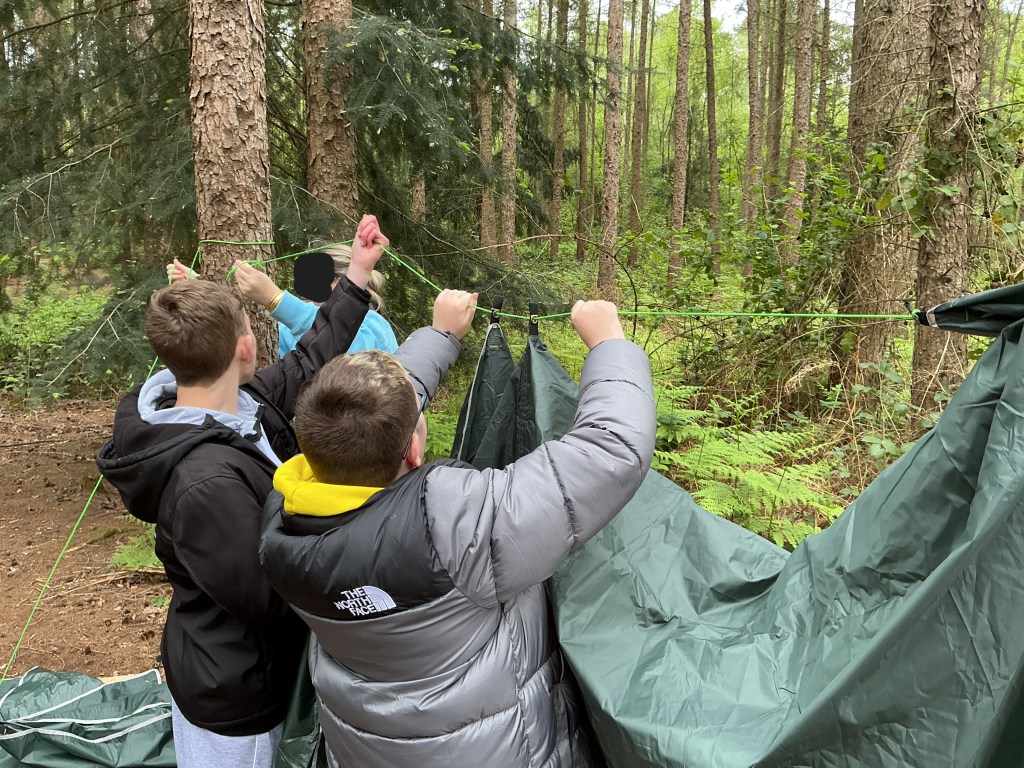
Positive behaviour also has a powerful influence on the group. When students encourage one another, share resources or work together to complete a task, they develop communication, cooperation and confidence. During activities such as shelter building, students naturally begin to share ideas, solve problems together and support one another. I have noticed that students who are initially reluctant to communicate often become more willing to contribute when they feel part of a successful team. These experiences help students to build positive relationships, develop confidence and become more willing to try new things.
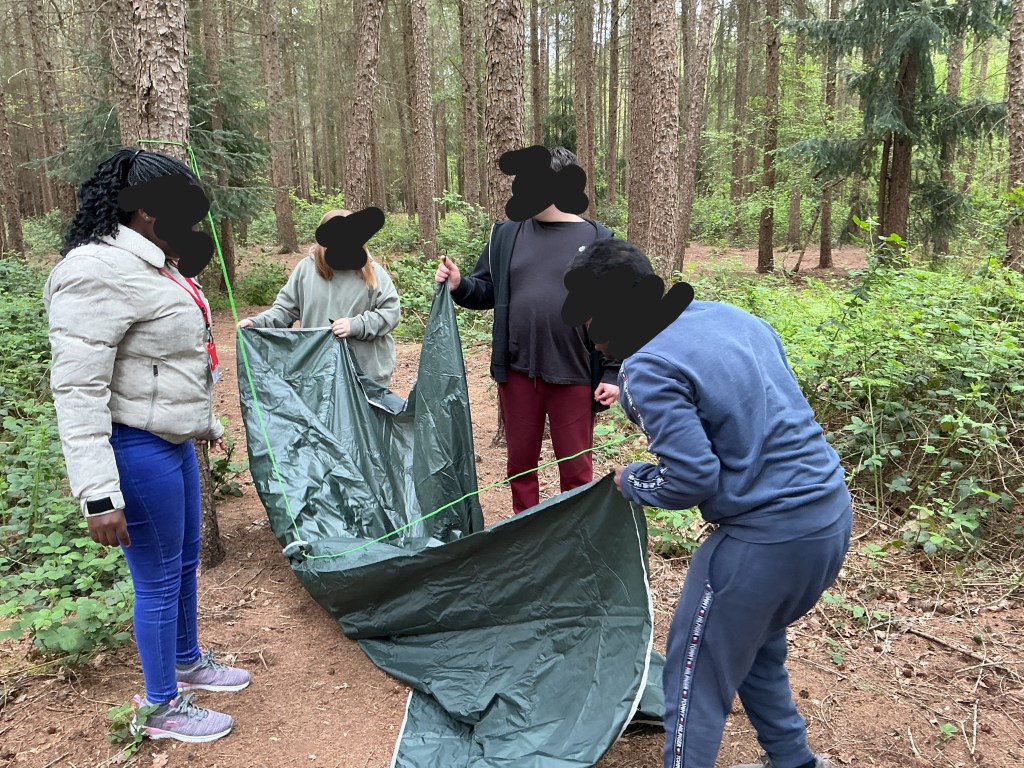
One example that stands out from my own practice was during Maisie’s first Forest School session. She thought it was a game to wander away from the group and hide. I recognised that she was not trying to be challenging; she simply did not understand the safety implications of leaving the group. After reflecting on the session, we introduced our first Forest School rule: ‘Make sure staff can see you at all times.’ However, I quickly realised that changing the wording to ‘Make sure you can see staff at all times’ was much more meaningful for my students. It encouraged them to take responsibility for their own safety rather than relying solely on adults. I have continued to use this rule in every session because it is simple, easy for my students to understand and encourages them to think about their own actions while remaining within safe boundaries.
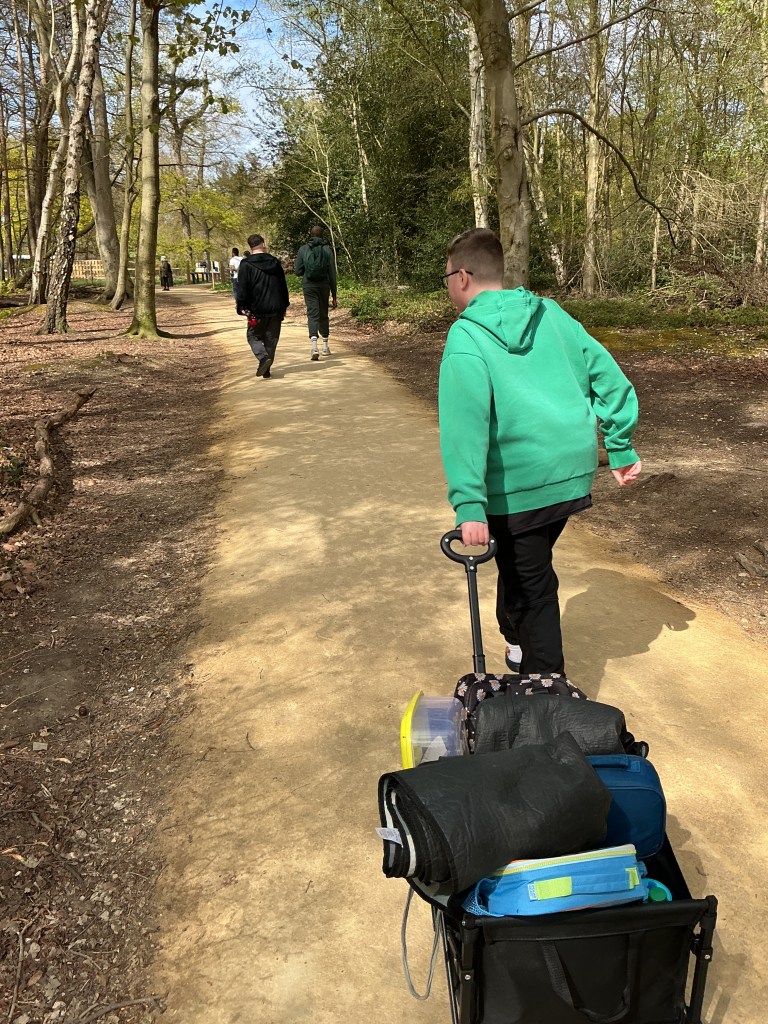
Before students can learn effectively, their basic needs must be met. Forest School practitioners have a responsibility to ensure students feel physically and emotionally safe throughout the session. This includes checking that students are dressed appropriately for the weather, encouraging regular drinks, providing opportunities to rest when needed and creating an environment where students feel secure and respected. Many of my students rely on familiar routines and trusted adults, so providing a predictable session structure and clear expectations helps reduce anxiety and supports positive behaviour. We recognised very quickly that we had lots of stuff that we wanted to take along with us to our sessions and we needed a more comfortable way of transporting things. The use of a special “Forest school trolley” ensured all students could help out, regardless of physical barriers.
An important principle of Forest School is providing opportunities for appropriate risk taking. Risk is not something to be removed completely; instead, it should be managed carefully so that students can challenge themselves while remaining safe. Appropriate risk taking helps students develop confidence, resilience, decision-making and independence. As a practitioner, my role is to create opportunities where students can experience manageable challenges while being supported to make safe decisions.
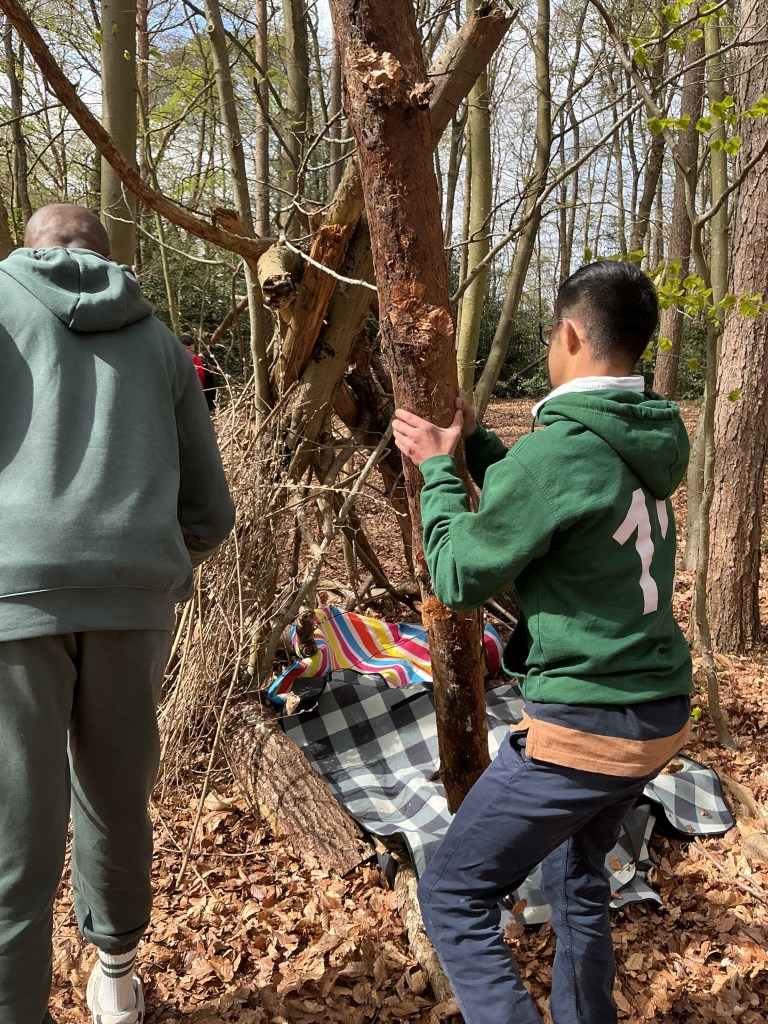
Examples of appropriate risk taking during my 6 weeks assessment sessions include exploration of a new woodland area, carrying natural materials, building shelters, and using hammocks. Each activity is supported by appropriate risk assessments, clear boundaries and individual supervision where required. Rather than completing tasks for students, I encourage them to think about how they can complete an activity safely for themselves. This helps them become active participants in managing risk rather than relying entirely on adult direction.
An important part of my role is observing each student’s ability to identify risk. Many of my students do not have a full understanding of danger due to their additional needs. Some would not recognise the risks of leaving the group, while others would not know how to seek help if they became lost. This means that teaching risk awareness is an essential part of every Forest School session. Rather than assuming students understand hazards, I provide repeated opportunities to explore them safely through discussion, modelling and practical experiences. I have found that asking questions such as, ‘What could happen if…?’ or ‘How could you make that safer?’ encourages students to think through situations for themselves and gradually develop their own judgement.
It is equally important to observe how students respond once they have identified a risk. Some students confidently adapt what they are doing, ask for support or choose an alternative approach, while others need frequent reminders and reassurance. For example, moving around the woodland can be challenging for some of my students, who can be clumsy on uneven ground or become distracted by their surroundings. Others may carry heavy logs without noticing people nearby or suddenly let go of a log without warning if they become tired or lose interest. These situations highlight the importance of close observation and remiding students to think about the safety of both themselves and those around them. Through regular opportunities to practise, students gradually become more aware of their environment, communicate more effectively with one another and begin to anticipate potential risks before acting.
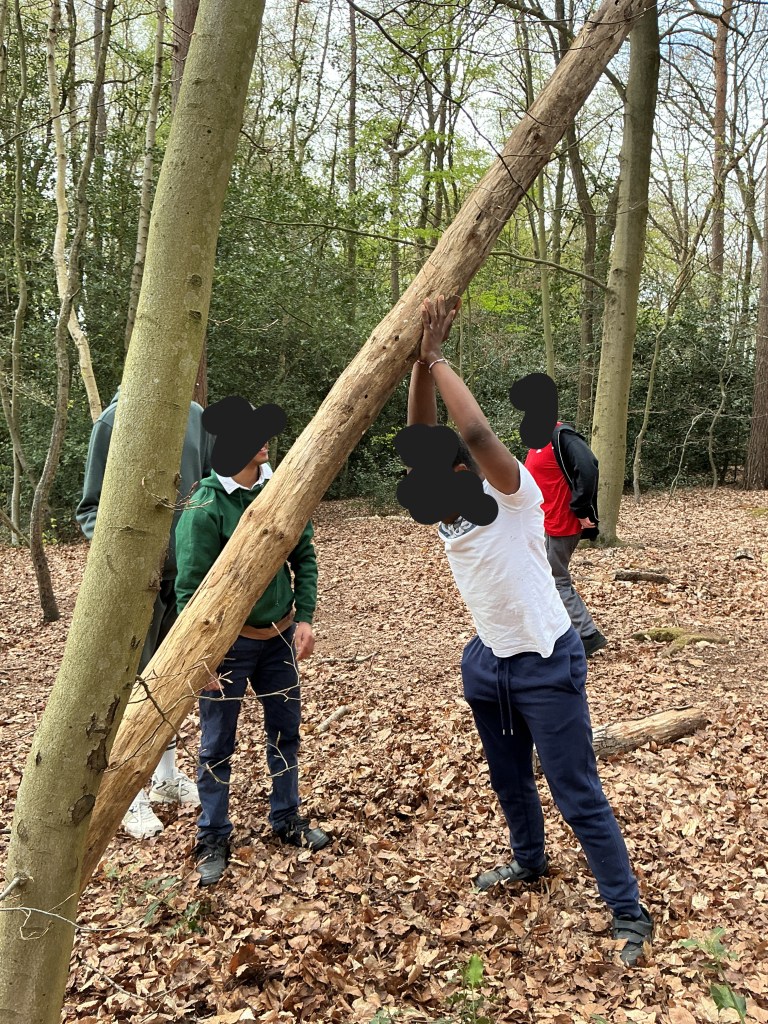
The level of appropriate risk changes over time as students develop. During their first Forest School sessions, many of my students required significant support and reassurance before attempting unfamiliar activities. As they become more familiar with the environment, routines and expectations, I have noticed that they begin to take greater responsibility for their own safety and require fewer prompts. Students who were once unsure of walking over uneven ground become more confident in judging where to place their feet. Others who initially needed constant reminders when carrying logs begin to communicate with their peers, checking that everyone is ready before moving or putting a log down safely. These small changes demonstrate growing awareness of both their own safety and the safety of others.
As a Forest School practitioner, I continually observe, assess and adapt activities to meet each student’s individual needs. This means that the level of challenge is appropriate for the individual rather than the group as a whole. My role is not to remove all risk, but to support students to recognise hazards, understand the possible consequences of their actions and make informed decisions about how to manage them safely. Sometimes students will decide that they do not yet feel confident enough to take part in a particular activity. I see this as a positive outcome, as recognising their own limits and asking for support demonstrates growing self-awareness and good decision-making.
By meeting students’ basic needs, creating a safe and supportive environment and providing opportunities for appropriate risk taking, Forest School enables students to develop confidence, resilience, independence and positive social behaviours that extend beyond the woodland setting. Looking back at my own practice, I have seen students become much more confident in the group setting. Take on leading roles and help thier peers without being prompted to do so. These may seem like small achievements, but for many of my students they represent significant steps towards greater independence, both within Forest School and in everyday life.

 Forest Footsteps
Leave a comment