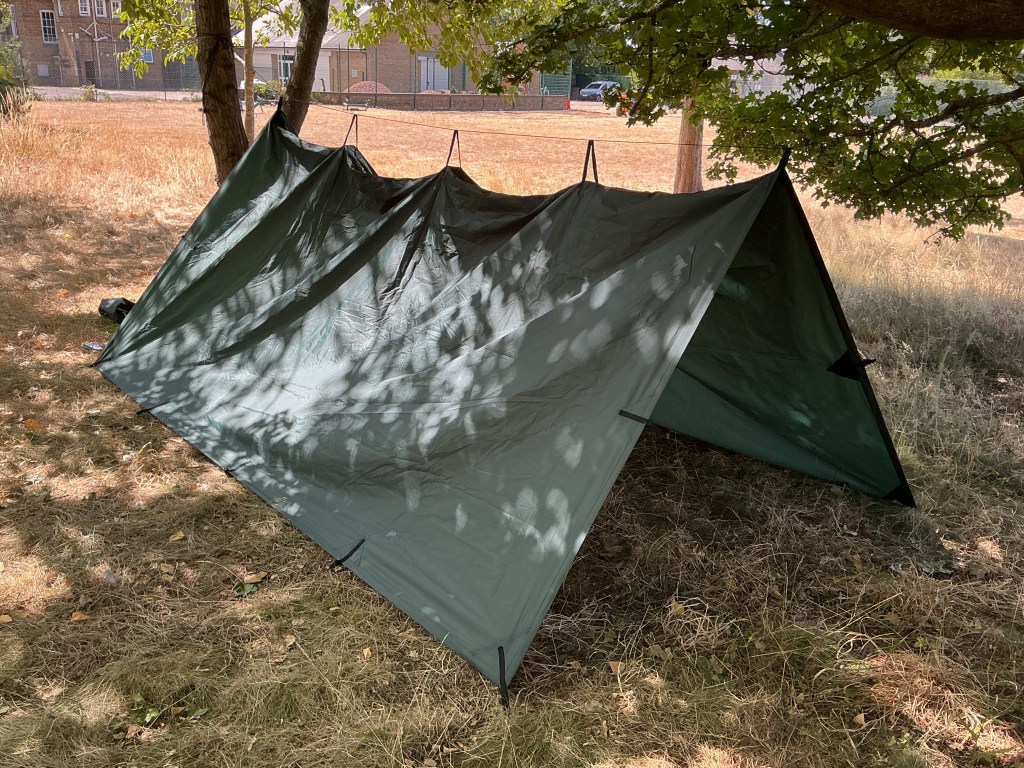
Kit Shelter
A kit shelter uses modern equipment, including a tarpaulin, guy lines and pegs, rather than relying solely on natural woodland materials. It provides a quick, reliable shelter from rain, wind or strong sunshine.
To begin, I would select two healthy, sturdy trees that are an appropriate distance apart. Before attaching the cord, I would check the area for hazards such as dead branches overhead, uneven ground or trip hazards.
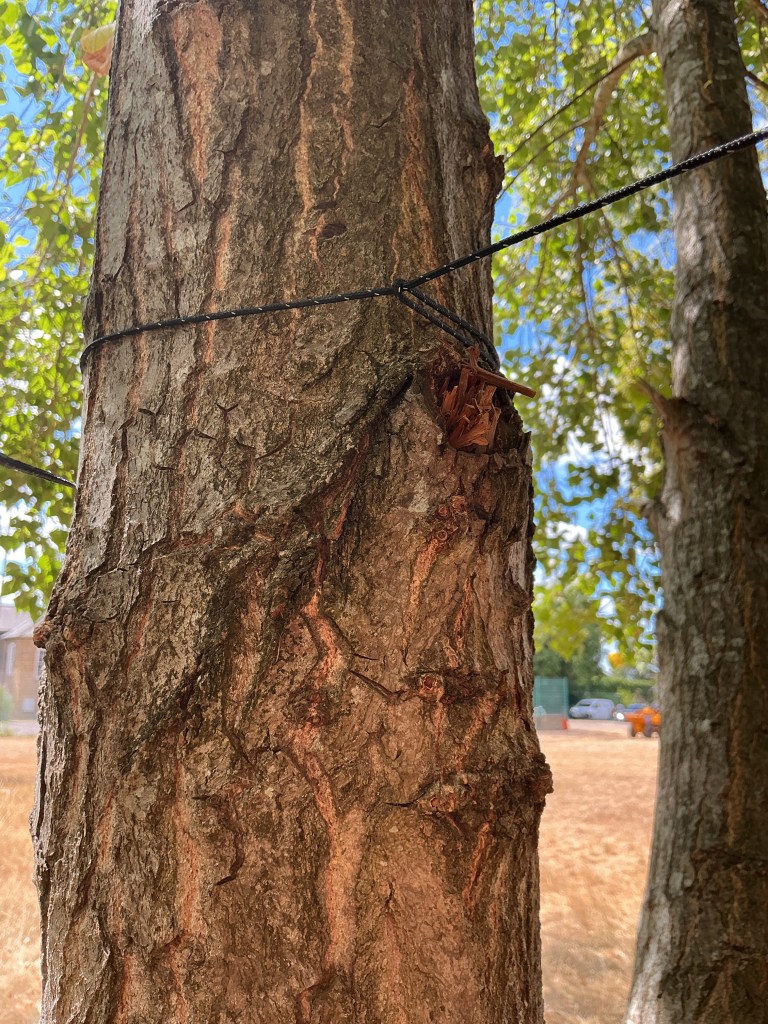
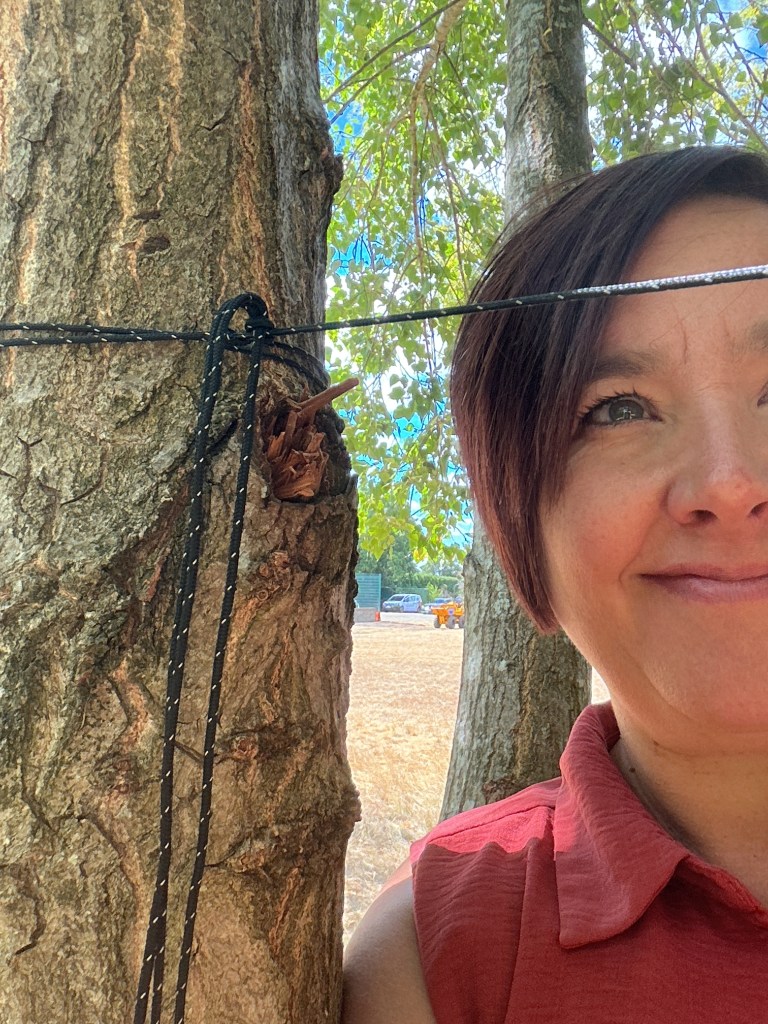
The first end of the cord is secured to one tree using a timber hitch, positioned between waist and shoulder height. This knot is quick to tie, grips well under tension and can easily be untied once the shelter is no longer required.
The free end of the cord is then threaded through the ridge attachment points of the tarpaulin.
Before being secured to the second tree using a tension knot. This allows the ridge line to be tightened, creating a firm framework that prevents the tarp from sagging and allows rainwater to run off effectively.
Once the ridge line is secure, the four corners of the tarpaulin are pulled out evenly. Working on opposite corners helps to keep the tarp under equal tension and prevents it from becoming twisted. Each corner is pegged into the ground at approximately a 45-degree angle away from the shelter, ensuring the pegs are secure and the tarp remains taut.

After the shelter has been erected, it should be checked carefully to ensure there are no loose ropes, sagging areas where rainwater could collect or pegs that could become trip hazards.
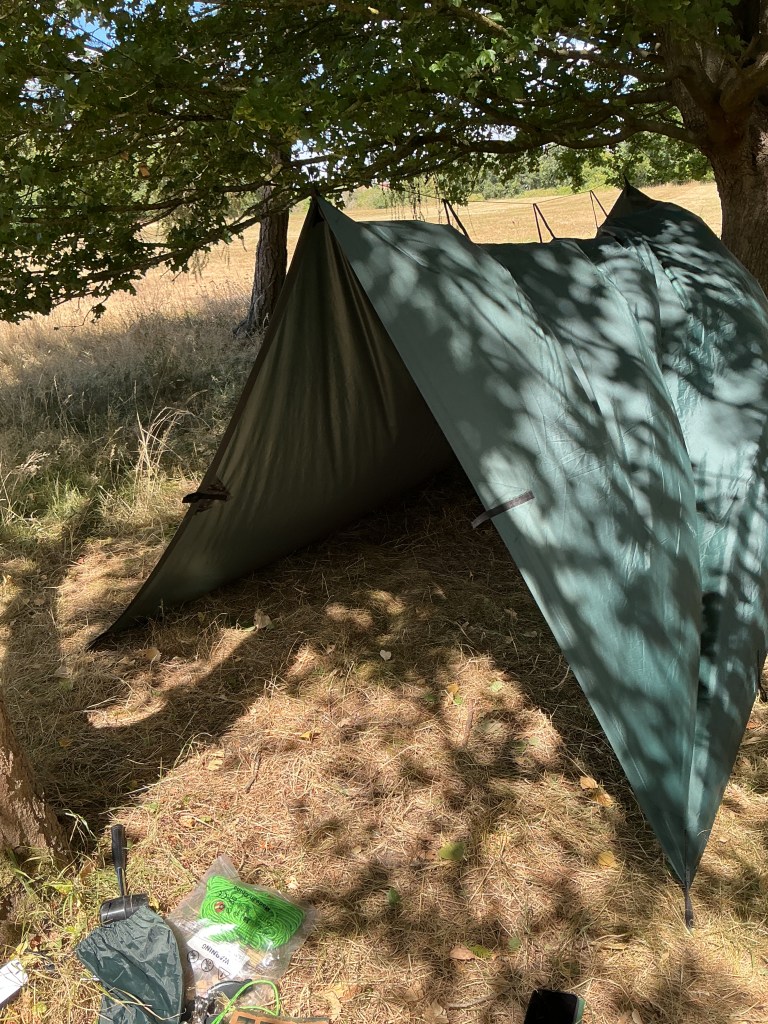
Having a dry, sheltered space also provides an area where students can regulate, eat lunch or continue activities safely during poor weather.
When using tarp shelters with my SEN students, I would adapt the activity to suit individual abilities. Some students may confidently help tie knots, while others may be more successful holding the tarp, passing equipment or hammering pegs into the ground with support. At first, I would demonstrate each stage clearly, breaking the task down into manageable steps and allowing students to work together.


Leave a Reply